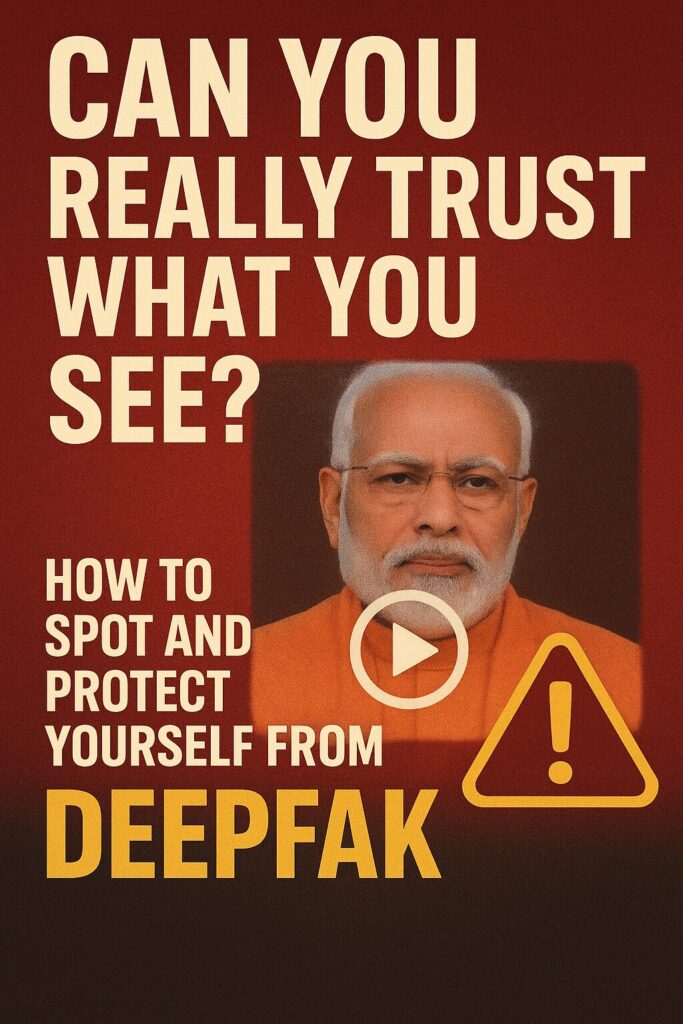
Recently, a viral video surfaced showing Indian Prime Minister Narendra Modi promoting a fake investment scheme. It quickly sparked concern worldwide about the impact of Deepfake technology.
Deepfakes are AI-generated videos or images that make it appear someone said or did something they never actually did. From politics to celebrity news, Deepfakes are blurring the line between reality and fiction—and it’s affecting everyone.
🔍 How to Spot a Deepfake
Identifying Deepfakes can be tricky, but these signs can help:
Unnatural facial movements – eye blinking or lip movements don’t match the speech. Inconsistent lighting – shadows on the face may not match the environment. Glitches or sudden jumps in video – abrupt changes in the image can indicate tampering. Off or artificial voice – voice that doesn’t match lip movements or sounds digitally altered.
🛡️ How to Protect Yourself
Check the source – avoid trusting unverified or unknown sources. Look for multiple sources – confirm the information on trusted media outlets. Use Deepfake detection tools – online tools can analyze images or videos for signs of manipulation.
🔗 Hard-to-Find, Useful Resources
NDTV – Viral Modi Deepfake Wikipedia – List of Fake News Troll Farms TrendSim – Deepfake Simulation Research
✨ Conclusion
Deepfakes are one of the biggest digital challenges of our time. Being aware of the technology, learning to spot manipulated content, and using reliable tools are essential skills in today’s media-driven world.
Protect your mind, question what you see, and don’t fall for AI illusions!
#DeepfakeAwareness #DigitalSafety #AIRealityCheck #SpotFakeVideos #FakeNewsAlert #SocialMediaSafety #TechAwareness #CyberSecurity #MediaLiteracy #AIManipulation #ViralTech #ProtectYourMind #DigitalTruth #AIThreats #FactCheck

Leave a Reply