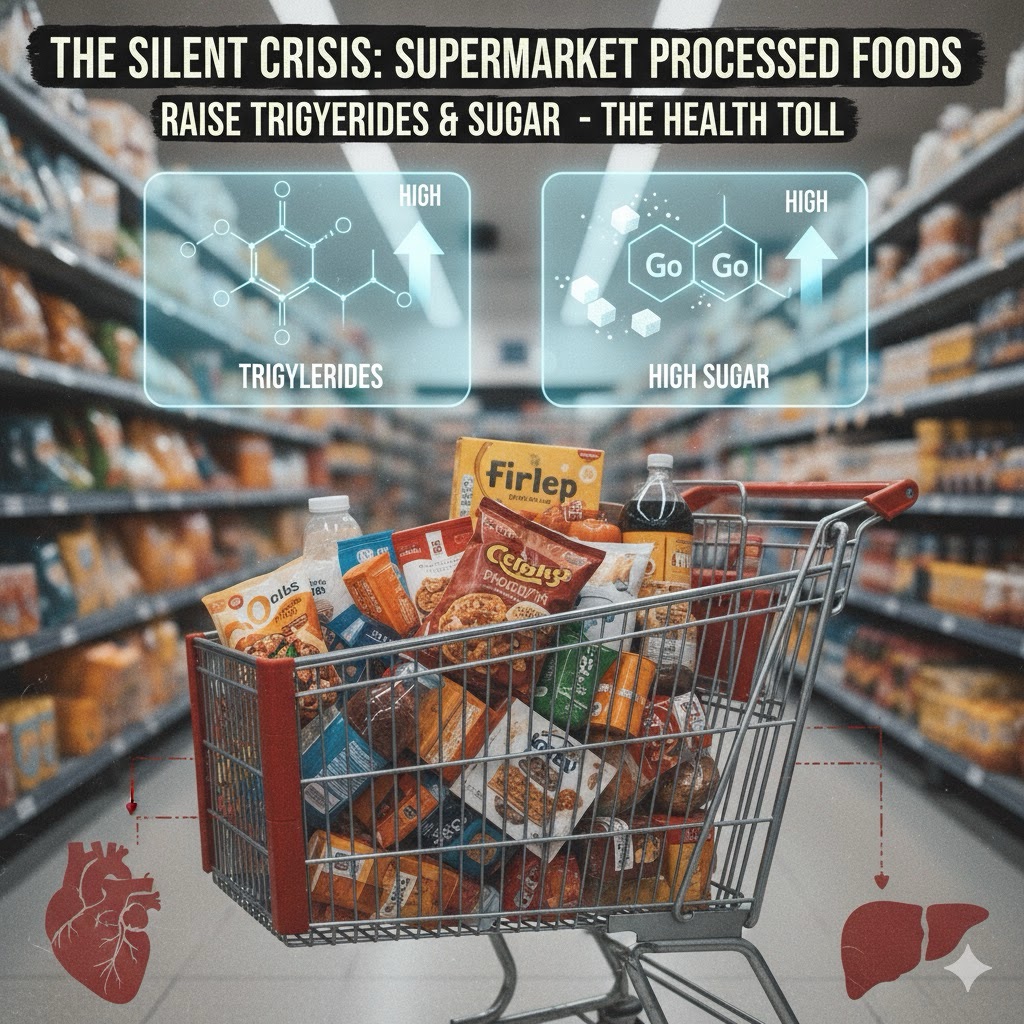
In recent decades, nutritional and health research has focused on the connection between modern diets and chronic diseases such as obesity, diabetes, and cardiovascular disease. One major phenomenon is the rise in triglycerides and blood sugar levels due to consuming processed and ready-made foods commonly found in supermarkets. But why does this happen if it’s well known that such food is unhealthy?
1. The Combination of Fats and Sugars – Double Temptation
Processed foods often contain a mix of simple sugars and saturated or trans fats. This combination activates the brain’s pleasure centers, increases cravings, and leads to overconsumption of calories.
Common examples: Cookies, snacks, frozen ready meals, and even commercial breads often contain both sugar and fat. Impact on triglycerides: When we consume high amounts of sugar and fat together, the liver converts the excess sugar into triglycerides, raising blood fat levels.
2. Preservatives and Processing
Processed foods are often heated, frozen, or treated with preservatives to maintain freshness and shelf life. These processes can alter the structure of fats, making them more harmful, and sometimes increase sugar and triglyceride levels.
Contribution to chronic disease: Studies show that consuming trans fats and processed ingredients is linked to a higher risk of type 2 diabetes and heart disease.
3. The Food Industry and Economics
Despite health knowledge, processed foods remain popular because of:
Low cost: Sugars and fats are cheaper than fresh food. Long shelf life: Processed foods last longer, making distribution easier. High sales potential: The tasty combination of sugar and fat encourages repeat consumption.
This creates a system where unhealthy food is the most accessible, affordable, and desirable option.
4. Health Consequences
Consuming processed foods high in sugar and fat leads to:
Increased blood triglycerides Elevated blood sugar and insulin levels Higher risk of obesity and type 2 diabetes Greater risk of cardiovascular disease
5. The Future – What If Governments Ban Such Foods?
If governments were to ban or limit unhealthy processed foods, we could expect:
Reduced sugar and fat consumption among the population Lower triglyceride and blood sugar levels Decreased rates of chronic nutrition-related diseases A shift toward fresher, healthier food choices
However, the challenge is both educational and economic – for healthy food to become widely available and affordable, systemic changes in the food industry and public awareness are required.
In recent decades, nutritional and health research has focused on the connection between modern diets and chronic diseases such as obesity, diabetes, and cardiovascular disease. One major phenomenon is the rise in triglycerides and blood sugar levels due to consuming processed and ready-made foods commonly found in supermarkets. But why does this happen if it’s well known that such food is unhealthy?
1. The Combination of Fats and Sugars – Double Temptation
Processed foods often contain a mix of simple sugars and saturated or trans fats. This combination activates the brain’s pleasure centers, increases cravings, and leads to overconsumption of calories.
Common examples: Cookies, snacks, frozen ready meals, and even commercial breads often contain both sugar and fat. Impact on triglycerides: When we consume high amounts of sugar and fat together, the liver converts the excess sugar into triglycerides, raising blood fat levels.
2. Preservatives and Processing
Processed foods are often heated, frozen, or treated with preservatives to maintain freshness and shelf life. These processes can alter the structure of fats, making them more harmful, and sometimes increase sugar and triglyceride levels.
Contribution to chronic disease: Studies show that consuming trans fats and processed ingredients is linked to a higher risk of type 2 diabetes and heart disease.
3. The Food Industry and Economics
Despite health knowledge, processed foods remain popular because of:
Low cost: Sugars and fats are cheaper than fresh food. Long shelf life: Processed foods last longer, making distribution easier. High sales potential: The tasty combination of sugar and fat encourages repeat consumption.
This creates a system where unhealthy food is the most accessible, affordable, and desirable option.
4. Health Consequences
Consuming processed foods high in sugar and fat leads to:
Increased blood triglycerides Elevated blood sugar and insulin levels Higher risk of obesity and type 2 diabetes Greater risk of cardiovascular disease
5. The Future – What If Governments Ban Such Foods?
If governments were to ban or limit unhealthy processed foods, we could expect:
Reduced sugar and fat consumption among the population Lower triglyceride and blood sugar levels Decreased rates of chronic nutrition-related diseases A shift toward fresher, healthier food choices
However, the challenge is both educational and economic – for healthy food to become widely available and affordable, systemic changes in the food industry and public awareness are required.
#ProcessedFood #Triglycerides #BloodSugar #HealthyEating #NutritionMatters #ChronicDiseasePrevention #FoodIndustry #EatFresh #HealthAwareness #DietAndHealth #SugarAndFat #HeartHealth #WellnessTips #NutritionEducation #HealthyLifestyle

Leave a Reply