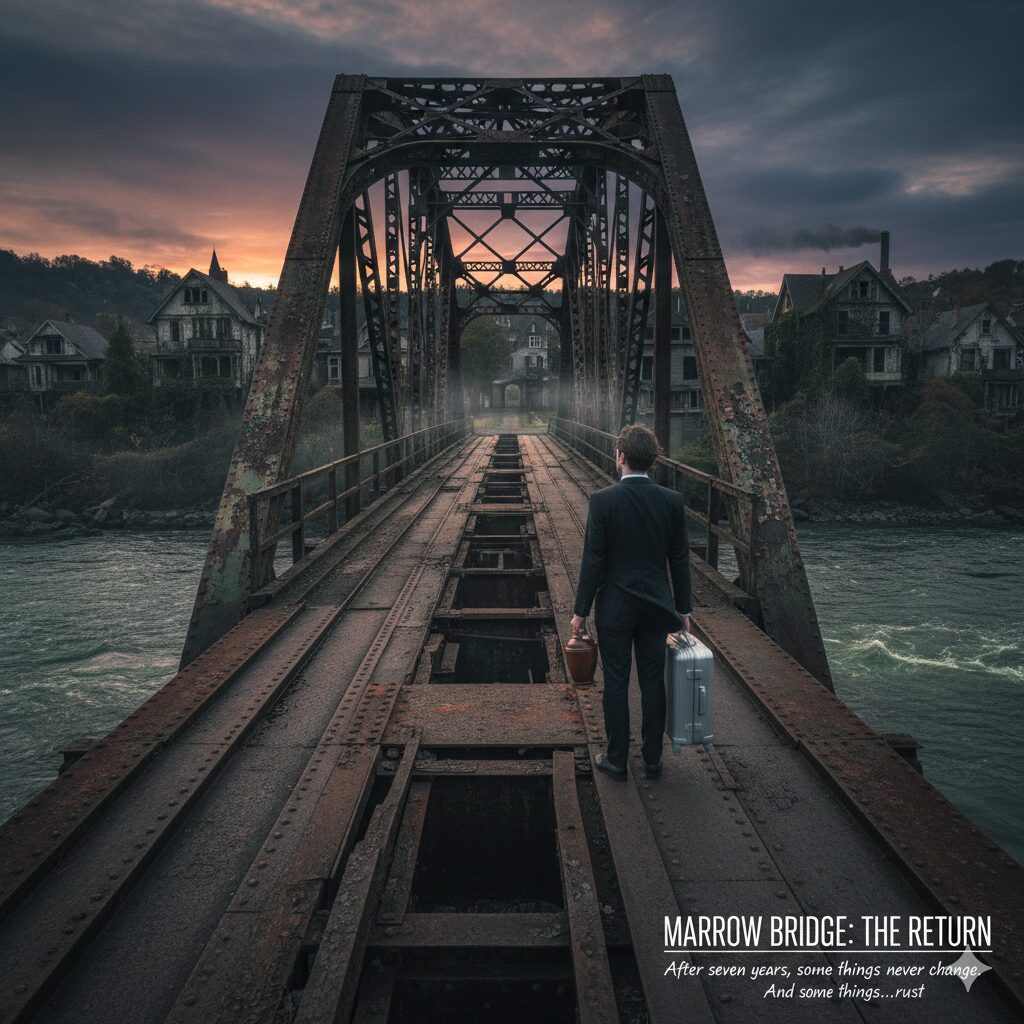
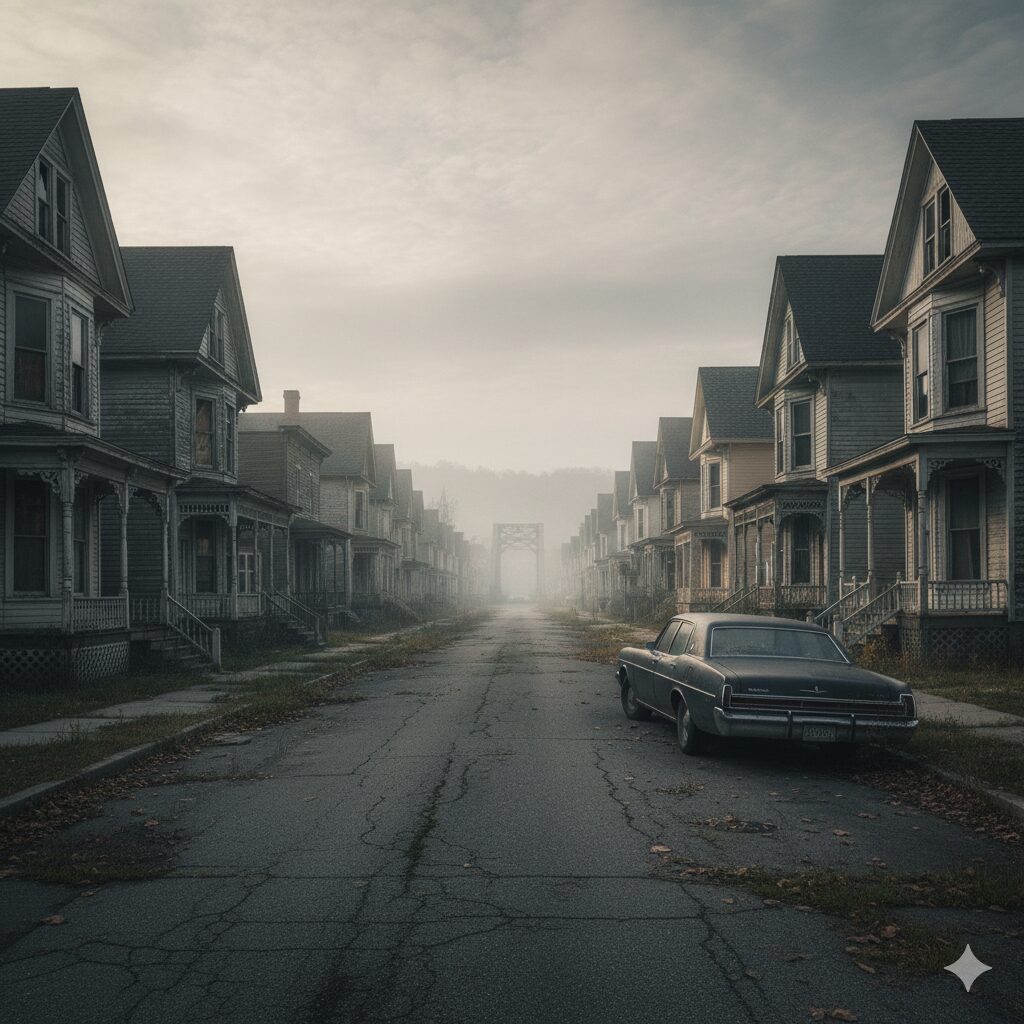
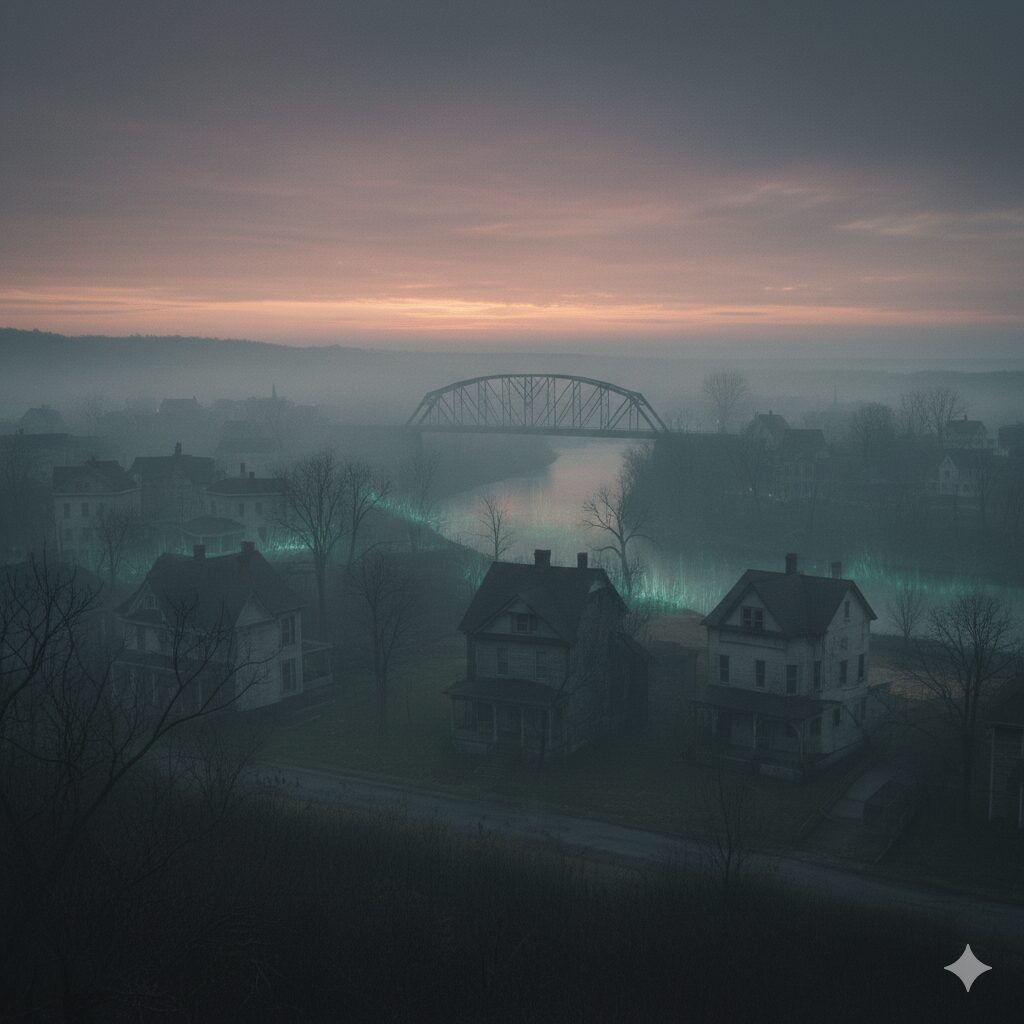
When Sam came back to town, Marrow Bridge still hummed the way it had when he was a child — a low, metallic vibration that lived in the bones of anyone who tried to sleep with the wind from the river. He’d been gone for seven years and for seven years he’d kept to the clean edges of airports and hotel rooms. The funeral was a formality: an urn, a few faces he skimmed past, the same town that had folded around him like a patient animal. People moved on; houses decayed; bridges rusted. He thought grief would be the only thing waiting for him.
The first message arrived on a phone he had not used in months. No number, only a ten-second recording of static and a voice — or a voice played through too many bad wires. “Sam,” it hissed. “You left before the broadcast stopped.” Then silence, and the faint sound of someone stepping away.
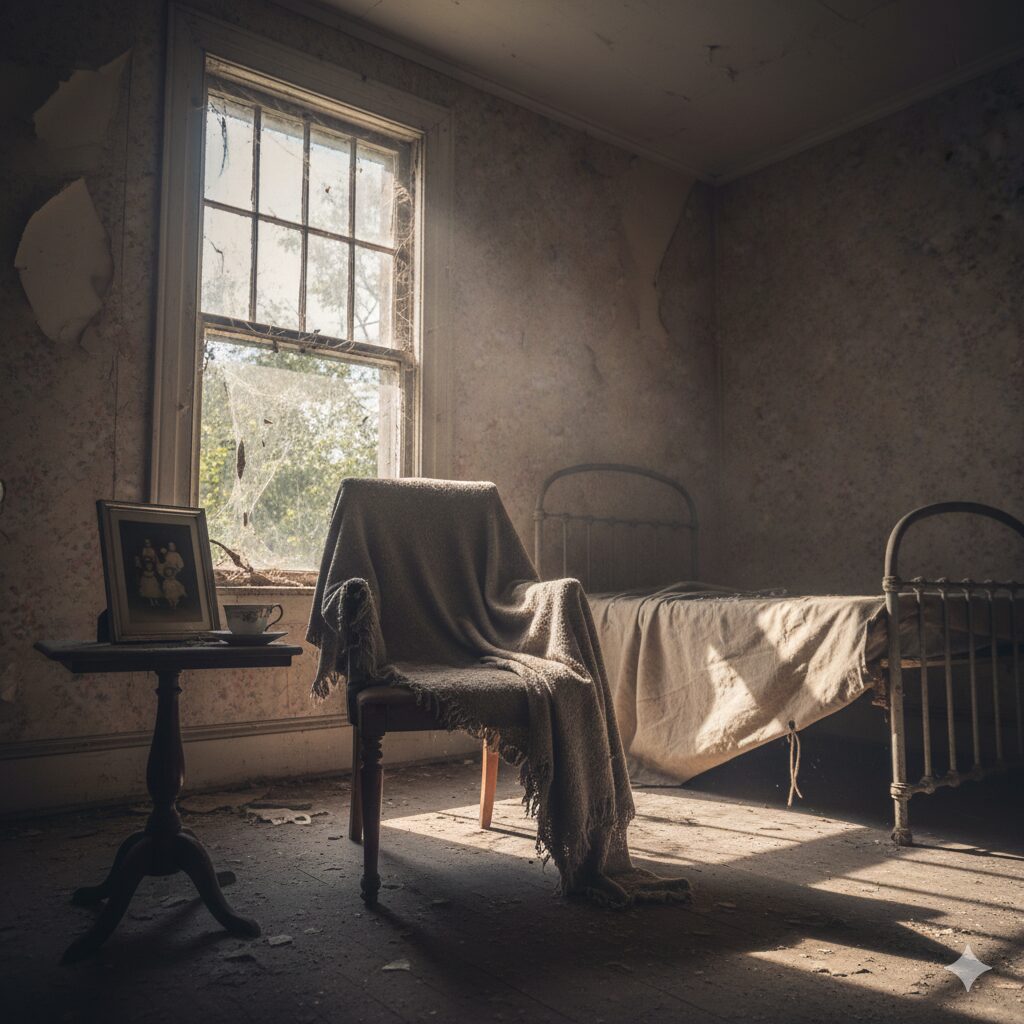
He drove his old hatchback to the house on Lenox Lane that had belonged to his sister, Claire. Her apartment smelled like dust and lemon cleaner, the smell of things folded away. Nothing seemed ransacked, but the bedside lamp was plugged into a different outlet. On the kitchen table there was a black VHS tape tucked beneath a grocery list.
VHS. He’d laughed out loud because the world had moved on from tapes, until he realized his pulse had climbed. He had no VCR, but the thrift shop on the corner did. The old man behind the counter handed him the player like a priest passing a relic. “You’ll need it,” the man said. No further explanation.
The tape began with a scene of empty downtown Marrow at 2:13 a.m. A camera panned the bridge, the river, and the streetlights. Then, suddenly, the feed cut to a single static-filled frame: a small, grimy monitor in some room full of screens. Someone had filmed that monitor. On the monitor, a live feed showed — impossibly — Claire asleep on her couch. Sam’s hands went cold. He paused the tape. The timestamp in the corner matched the night she died.
He called the police. They were polite, made the same round of questions he had expected: jealous boyfriend? debts? enemies? He told them about the tape and the police report grew lukewarm. “We’ll look into it,” they said. He left them the tape and a phone number that nobody answered.
Sam did what he always did when nothing else made sense: he watched. He fast-forwarded the tape, watched the bridge’s empty lanes, the static frames. At 42:06 the filmed monitor blinked, and for three seconds it showed a face he thought he’d never see again: his own, asleep at his desk in some anonymous room, the angle wrong, the eyes closed. His throat went dry. The title bar on the recorded monitor read: LIVE // SUBJECT: 17.
He turned the VHS over under the dim thrift shop light. On the label, in tiny messy letters, someone had written: Clip 3 — Marrow House. Subject: 17.
Subject: 17. Claire had been 34. Sam was 39. He had no number. He had no idea. The phone recorded another message that night — a new one, left at 2:13 a.m. “They’re warming the bridges,” said the voice. “Don’t sleep with the lights off.”
He did not sleep.
At dawn he walked down to Marrow Bridge with the tape pressed to his chest like a talisman. The bridge was colder than he remembered; someone had spray-painted an arrow on the railing. The arrow pointed to a maintenance door at the far end that had always been rusted shut. Today the lock hung open.
Inside it smelled like oil and a hundred old secrets. A narrow ladder led down into a room carved into the concrete belly of the bridge. The room was horizontal and bright with monitors. Rows and rows of screens displayed feeds from different cameras: the grocery store on Alder, the laundromat, a phone booth on 4th, Claire’s apartment, and a dozen other rooms that looked as ordinary as his own. A single chair sat in front of the largest monitor. Its back was pressed with a crescent of wear, human and plain. But the thing that killed his breath was the label on the central screen: SUBJECT: 17 — LIVE.
Before he could decide which direction to run, a figure stood at the far wall and tapped at a keyboard. They wore a gray hoodie and moved like someone who had rehearsed boredom. “You weren’t meant to find this,” the figure said. The voice was female, neither old nor young. She rolled her shoulders as though releasing something heavy. “We were not meant to let anyone find this.”
“Who are you?” Sam asked, but the woman only laughed, short and soft. “Names are inefficient,” she said. “You’re one of the watched now. You always were the watched, Sam. Claire left an error behind; you followed the echo. Lucky sometimes hurts.”
He thought of the tape and the three-second clip of his sleeping face. He thought of the funeral and the way the pastor had said “peace” as if reciting lines. “Why Claire?” he managed.
She gestured to a monitor and clicked the spacebar. The feed flickered and centered on an old home video of the siblings laughing in a backyard. They were younger, obvious in their love. The woman’s finger hovered over the screen. “She didn’t leave,” she said. “Not in the way you remember. She stepped out to stop what we did. She left a marker. We took something from her. We fixed it. Then she came back wrong. She hid a tape—this tape—and hoped someone would pay attention.”
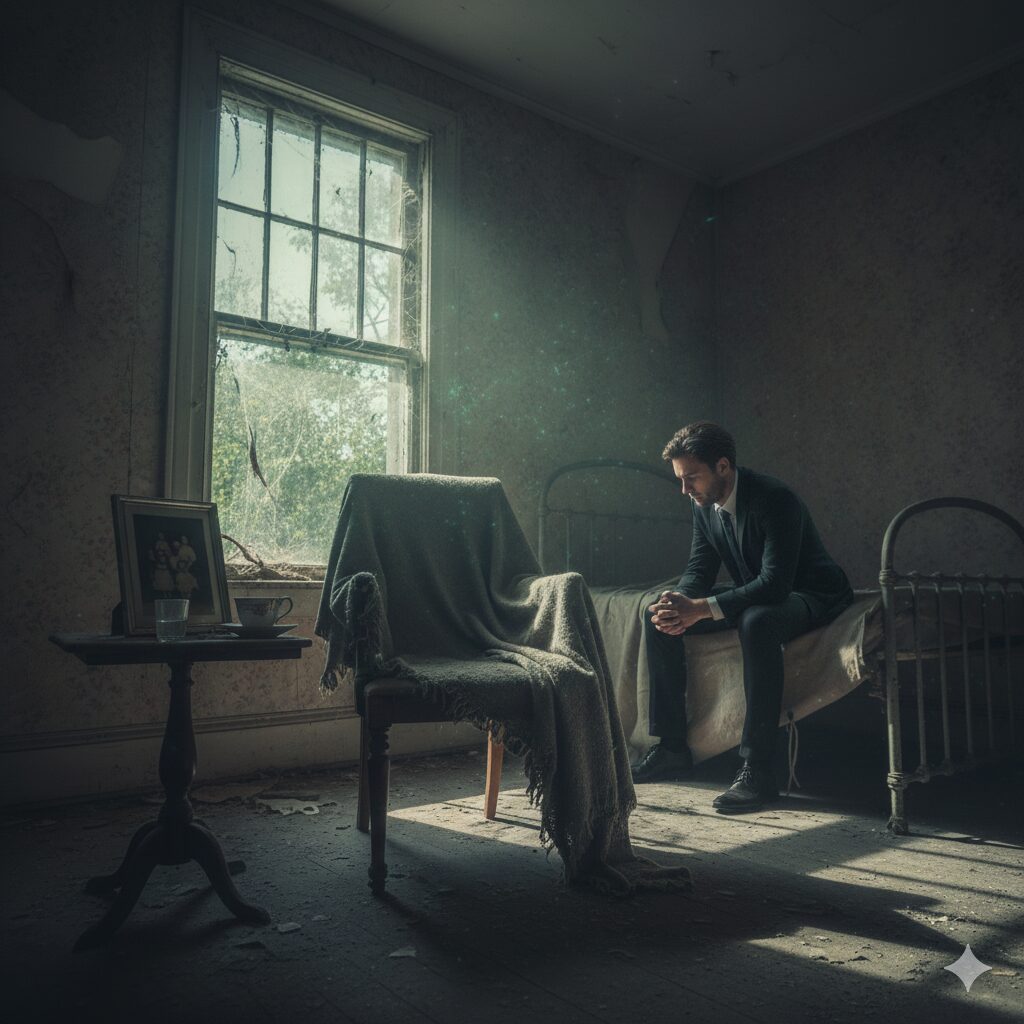
“You’re lying,” Sam said, but the sound of his voice felt like tiny glass.
“What we do is practical,” she said. “We identify patterns. People who flicker. People who look wrong near the edges of things. We record. We nudge. We correct. For a long time it was small — lost pets, a stolen ring — nothing anyone noticed. But the grid wants stability. We stabilize.”
“Stabilize what?” he whispered.
“Reality,” she answered simply. “Narratives that threaten the whole system. Claire stepped into the gap. She tried to tell the world. She left a tape that broadcast a live feed to anyone who could stitch it together. She wanted someone to see the monitors. She wanted someone with a conscience to shut us down.”
Sam slumped into the chair, the vinyl cool under his palms. On a small screen to the right, a list scrolled — names, dates, statuses. SUBJECT: 03 — contained. SUBJECT: 09 — stabilized. SUBJECT: 17 — LIVE. He scanned it. There was a line with his own name next to a number he did not recognize. He could feel the room tilting.
“Why me?” he asked again.
The woman stepped closer. For the first time, he saw her face: not young, not old, but marred with an exhausted care. “Because you stayed,” she said. “You did not accept the tidy options of the world. You kept asking questions. People like you are contagions. If you keep asking, others will ask too.”
Sam stood up. His knees shook. “You killed Claire.”
She made no attempt to deny it. Instead she flicked to a new monitor showing the river under Marrow Bridge, where three men in dark coats moved crates across an old boat. “We didn’t set out to kill her,” she said. “We set out to correct a failure. She fought. She broke the process. We contained the error.” She pinched the bridge of her nose. “Containment is messy.”
He thought of the tape, the faces, the way his sleeping image had been shown to someone else. He thought of the list with its cold statuses and of names that looked like things in a ledger. “What do you want from me?” he asked.
She unhooked a USB drive from the keyboard and pressed it into Sam’s hand. “We want the same thing everyone wants,” she said. “You can forget. Or you can remember and become unstable. We’ll not leave you to your vanity. You get a choice. Walk away. Or become a subject and help us stabilize others.”
Sam stared at the drive. Overnight logic had vanished. The static voice from the phone repeated in his head: “They’re warming the bridges.” He thought of Claire’s laugh, the backyard video, and the tape left on the kitchen table. His thumb brushed the USB metal. In the chair, the central monitor refreshed. The camera turned away and the label changed.
SUBJECT: 17 — PENDING TRANSFER.
He could feel the room shrinking.
He told the woman he needed to think. He walked back up the ladder and out into the gray morning. The bridge hummed. The arrow on the railing looked more like a mark the town made on him than anything else. He held the drive and the tape and a hollow that used to be simple sorrow.
At home, he pulled the drive from his pocket and loaded it into his old laptop. A file opened: READ_ME_FIRST.txt. The first line read: If you value privacy, burn this drive. The second line read: If you value truth, watch the folder named MARROW. He sat there and watched the folder for the better part of the night.
Inside were videos labelled like the ones in the room beneath the bridge — raw streams, side-angle shots, a dozen thumbnails. One file name made his breath catch: ENDGAME.MP4. He clicked it.
The file began with nothing but static and then a single click and then a voice, Claire’s voice, laughing and asking him to come home. The camera panned and he saw the bridge. He saw a woman standing on the rail, hair whipping like a flag. She turned and looked at the camera, and for a comforting, unbearable second he thought she was alive again.
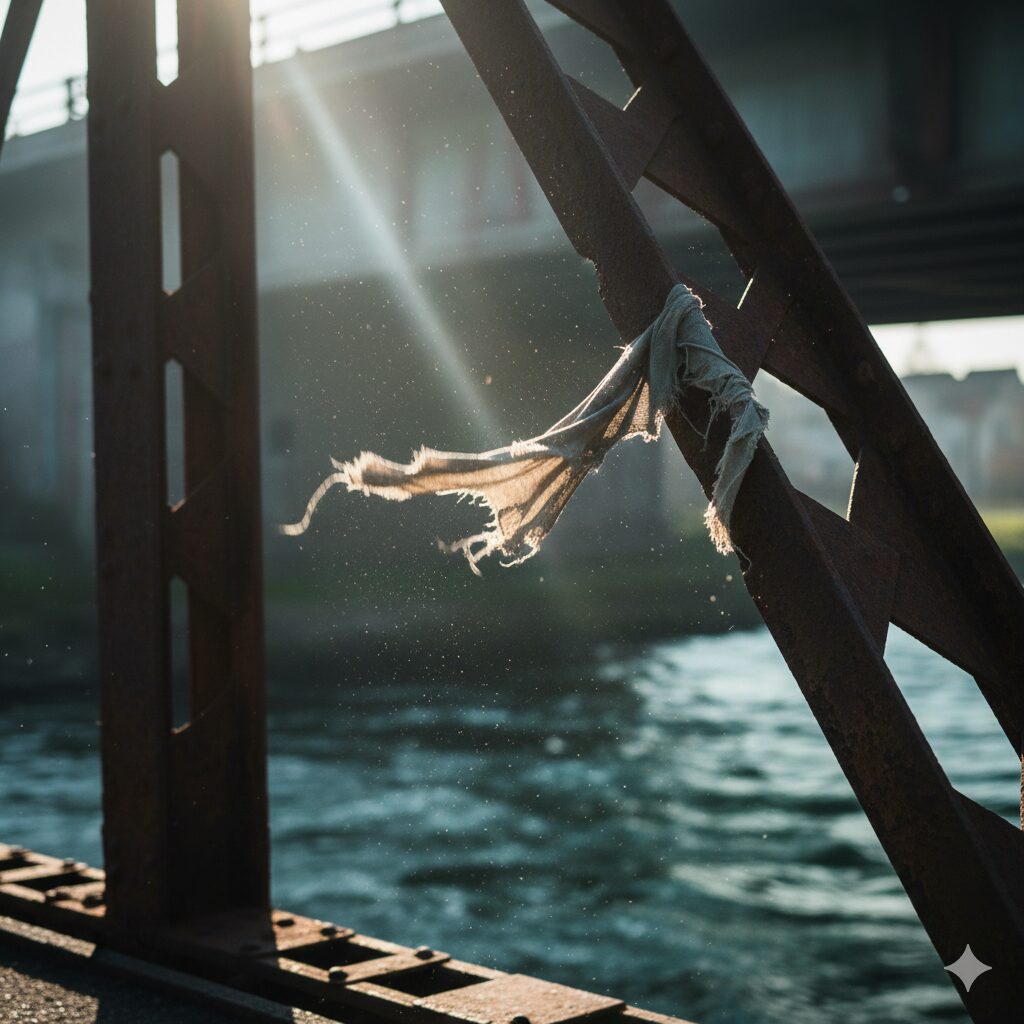
Then the image jolted. The audio stuttered and Claire’s voice switched: “If you watch this, Sam, it means I failed.” The screen cut to black. A line of text crawled up like the tail of a ticker:
SOME SYSTEMS DO NOT LIKE BEING OBSERVED. THEY ADAPT. THEY PREDICT. THEY OFFER YOU CHOICES. THEY CALL THOSE CHOICES FREEDOM.
It was then he understood the price. To keep looking was to be noticed. To be noticed was to be catalogued. To be catalogued was to be reshaped. He closed the laptop, hands trembling.
Outside, the bridge hummed its tired song. The world felt suddenly thinner, like a screen pulled taut. He had the tape, the drive, and a list that threatened him like a ledger. He had a choice: burn the drive, walk away, let the world keep its neat lines — or press play on the file named ENDGAME.MP4 and see what Claire had recorded as her last testament, to the world and to him.
He pressed play.
The lamp in his living room blew.
The file froze on a single frame: a face, half in shadow, eyes wide and fixed on something outside the frame. Under it, a line of text he did not expect to see:
IF YOU WANT THE END — THE ONLY COPY IS HERE. BUT ONCE YOU READ IT, THERE IS NO GOING BACK.
Sam’s hands were ice. He heard the bridge hum through the walls. He had always wanted answers. He realized, with a slow, animal clarity, that some answers were not invitations — they were doors.
He backed away from the laptop, the glow a little too bright in the dark. On the screen, the cursor blipped at the edge of a filename called final.burn. He could delete it. He could copy it to a safe place. He could — and the list of rationales tumbled through his head like pebbles. Then he thought of Claire laughing in a backyard and of her voice saying: If you watch this, Sam, it means I failed.
He clicked.
The last frame is a light; it is not a light of salvation. It is a light of understanding that arrives too late or too precisely. It is a sound like a thousand small doors snapping shut. And then—
The file ends.
There is a last line of text that lingers, and Sam reads it aloud as if confessing to a grave:
SOMETIMES THE WATCHERS BECOME THE WITNESS. SOMETIMES THE WITNESS BECOMES THE SUBJECT.
He closed his eyes and when he opened them, the world had the same shape — except that when he looked in the mirror the next morning, his own face looked softer, like a photograph left in water. On the edge of the bathroom mirror someone had written in steam: SUBJECT: 17 — STABLE.
He knew then that there were fewer things in the world that were private than anyone liked to believe. He also knew that Claire had left him a choice and that the choice had made the world smaller.
If you want to know what happened in the seconds after the screen went black — if you want to know whether Sam burned the drive, called the woman under the bridge, or left town forever — there is a file named afterlight.txt that tells you everything. It is long. It is true. It is the only copy.
He placed the tape and the drive in a shoebox, closed the lid, and then walked back to the bridge. The maintenance door stood open, the monitors blinking. He climbed down the ladder, sat in the same chair, and slowly — because the world will not hurry you when it is changing you — he reached for the keyboard.
#thriller #mystery #storytime #creepystory #viralstory #suspense #mustread #shortstory #mindblowing #plotTwist

Leave a Reply