The Shadow IT Illusion: How Orphaned Cloud Resources and Rogue Accounts Are Bleeding Your Enterprise Dry
Walk into any enterprise boardroom, ask the Director of Infrastructure if they have full inventory control over their cloud environments, and you will get a confident nod. “Everything is documented in our IaC repositories. Every server is accounted for.”
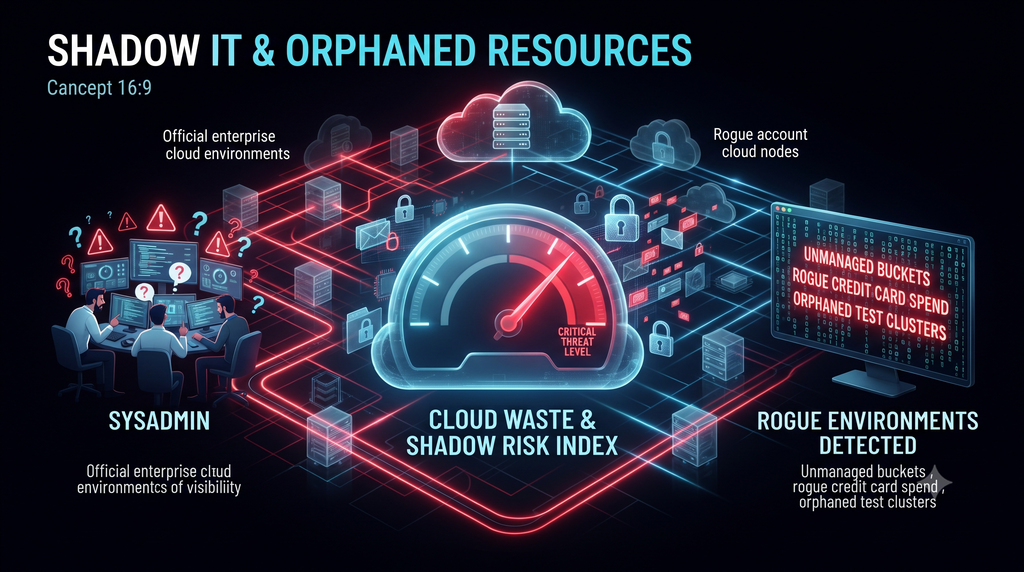
Now, walk down to the marketing department. Ask them how they launched that high-traffic campaign microsite last month. Watch them proudly explain how they spun up a rogue AWS account with a corporate credit card because “IT took too long to provision a VM.” Walk over to the R&D bullpen and look at the forgotten Kubernetes test clusters running 24/7 in production-adjacent subscriptions with default admin credentials.
This is the terrifying reality of Shadow IT. It doesn’t look like malicious hackers breaking through your perimeter; it looks like convenience, agility, and absolute administrative blindness.
The Anatomy of Invisible Budget Bleed
Traditional IT management tools only track what you register. They are completely blind to what business units spin up off-the-books. This creates three critical threat vectors:
- Orphaned Cloud Waste: Forgotten staging clusters, unattached EBS volumes, and abandoned static storage buckets left running for months without active traffic.
- The Rogue Corporate Credit Card: Subsidiary business units bypassing central governance to buy SaaS tools and cloud credits directly, completely bypassing security logging and SIEM integration.
- Unmonitored External Perimeter: Development endpoints exposed directly to the public internet without corporate VPN or Zero Trust access controls.
🔍 Shadow IT & Orphaned Resource Leakage Calculator
Input your organization’s baseline metrics below to calculate your estimated hidden cloud waste and external exposure index:
Audit Findings & Risk Exposure Analysis:
Conclusion & Next Steps
Closing the Shadow IT gap isn’t about locking down developers or stifling business agility with bureaucracy. It’s about deploying automated cloud posture management, enforcing strict tagging policies, and auditing your external DNS records before an external threat actor finds the backdoor you forgot existed.
Did this audit expose uncomfortable truths about your infrastructure?
Don’t let your team stay blind. Share this interactive calculator with your fellow DevOps engineers, CISOs, and IT leaders right now!


Leave a Reply