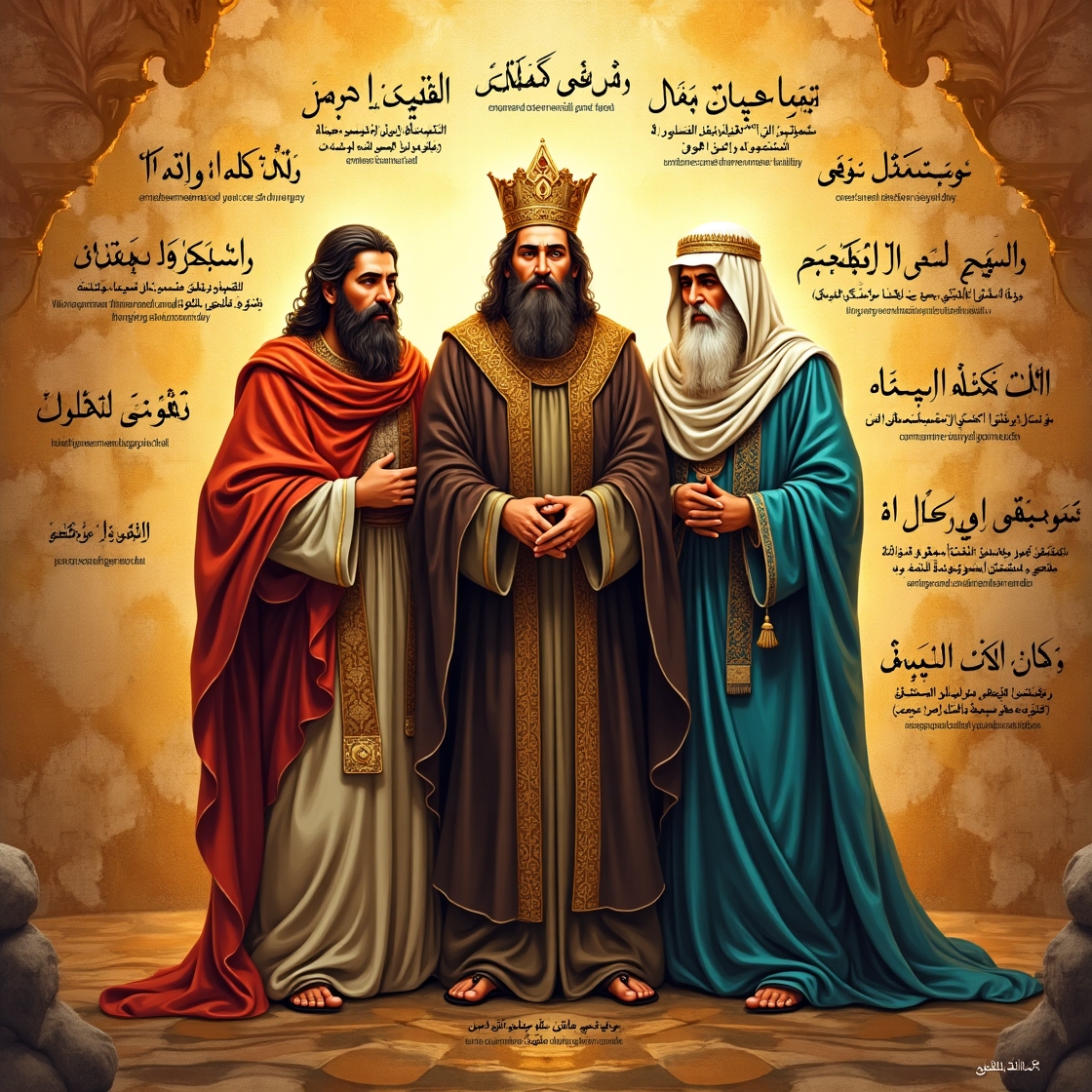
Judaism, Christianity, and Islam: The Untold Story of Rivalry and Connection
A unique deep-dive into the Abrahamic roots, similarities, conflicts, and why Islam claims to be the final truth.
The Shared Abrahamic Root
Judaism, Christianity, and Islam are known as the Abrahamic religions because all trace their spiritual heritage back to the patriarch Abraham. Yet, each faith interprets Abraham’s legacy differently:
- Judaism: Abraham is the father of the Jewish nation through Isaac and Jacob.
- Christianity: Abraham is the model of faith, whose belief is a symbol of justification through faith.
- Islam: Abraham (Ibrahim) is the perfect monotheist (Hanif), who rejected idols, built the Kaaba with his son Ishmael, and submitted fully to Allah.
Why Islam Sees Itself as the Final Religion
From the Islamic perspective, all prophets from Adam to Jesus delivered the same core message: There is only one God. Judaism and Christianity are respected as earlier revelations, but Islam teaches that both strayed from the pure message of Abraham:
- Judaism: accused of altering the scriptures and rejecting later prophets.
- Christianity: accused of introducing the Trinity and elevating Jesus to divine status.
Therefore, the Qur’an is presented as the final, uncorrupted revelation, and Muhammad as the Seal of the Prophets.
The Source of Tension
Why the hostility at times? Historically, the relationship has shifted between coexistence and conflict:
- In Medina: Muhammad’s conflict with Jewish tribes created early theological tension.
- Middle Ages: Jews and Christians lived as dhimmis under Muslim rule—protected, but second-class citizens.
- Modern era: The rise of nationalism, colonialism, and especially the Arab-Israeli conflict fueled hostility far more than theology alone.
A Complex Relationship
Despite tensions, history also records golden ages of coexistence—most famously in Muslim Spain, where Jewish, Christian, and Muslim scholars advanced philosophy, medicine, and science together. The story is not one of eternal hostility, but of shifting alliances and rivalries.
Why This Conversation Matters Today
In today’s polarized world, understanding the theological roots and historical realities of these religions helps us move beyond stereotypes. The Abrahamic faiths are siblings—different, often rivalrous, but deeply connected. Knowing this history empowers dialogue, tolerance, and mutual respect.
Final Thoughts
Islam’s claim as the final revelation places it in a unique position: both embracing and rejecting Judaism and Christianity at the same time. This paradox explains centuries of both cooperation and conflict. To understand the future of interfaith relations, we must first understand this shared past.
👉 Share this article if you believe more people should understand the true story of the Abrahamic religions!
#AbrahamicFaiths #Judaism #Christianity #Islam #AbrahamicReligions #AbrahamicTradition #HistoryOfReligion #Monotheism #FaithAndHistory #ReligiousOrigins #AbrahamicRoots #ReligionExplained #TruthAndFaith #SpiritualJourney #FaithDebate #ReligionFacts #ReligiousStudies #InterfaithDialogue #ReligionAndCulture #TheologyDiscussion #WorldReligions

Leave a Reply