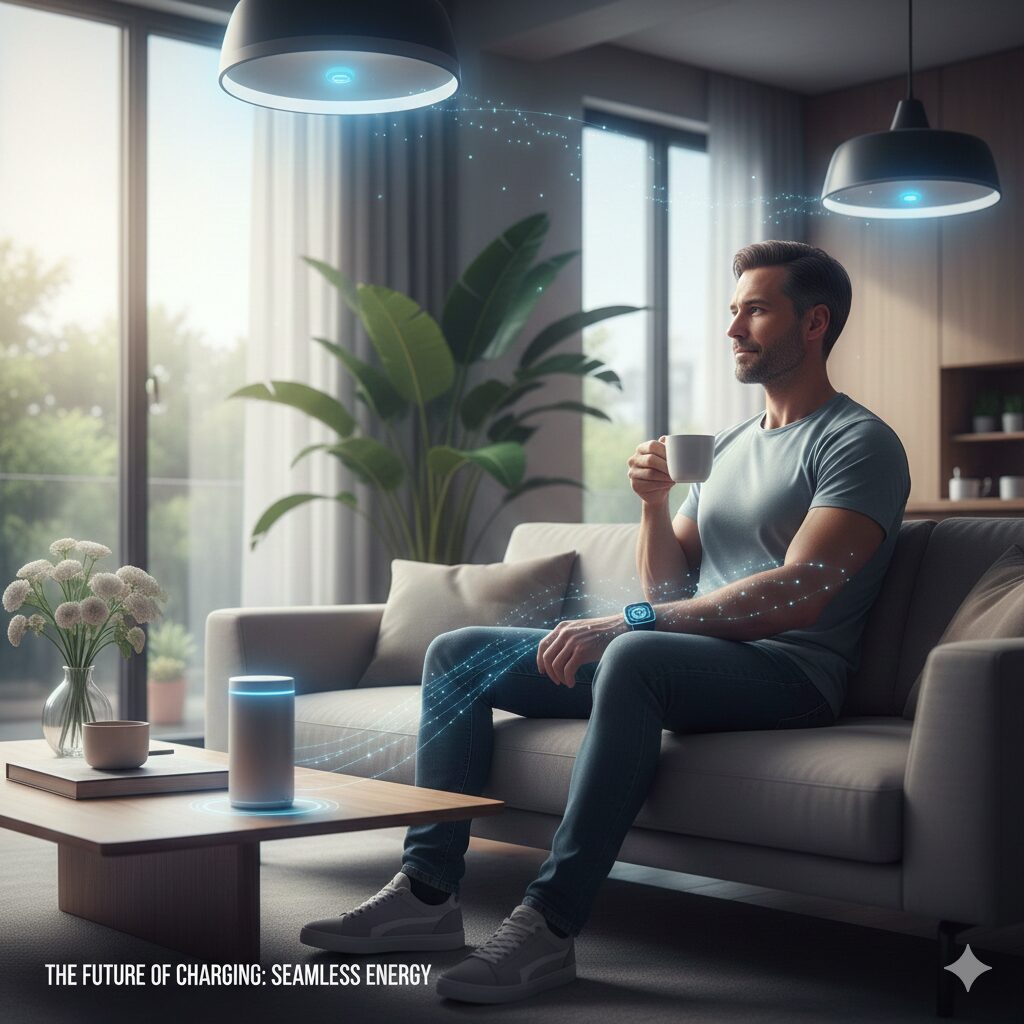
The Smartwatch Charging Problem Nobody Talks About
Smartwatches are among the most personal devices we own. They track our heart rate, sleep, movement, stress, and even early signs of illness. Yet, despite all this sophistication, one basic problem remains unsolved: you still have to take them off to charge them.
The Hidden Cost of Taking a Watch Off
Removing a smartwatch might sound trivial, but it creates a chain of small yet meaningful problems:
- Loss of continuous health monitoring during charging
- Missed sleep and recovery data
- Inconvenient charging schedules that disrupt daily routines
- Higher risk of forgetting or misplacing the device
For a device designed to be worn all day and night, the need to remove it for power feels fundamentally wrong.
Why Current Solutions Fall Short
Manufacturers have tried to address battery limitations in several ways, but each approach comes with trade-offs:
- Larger batteries make watches bulkier and less comfortable
- Fast charging still requires removal and creates heat and wear
- Battery-saving modes reduce the very features users rely on
- External battery accessories add complexity and friction
None of these truly solve the core issue: charging interrupts usage.
Rethinking Charging as a Passive Experience
What if charging didn’t feel like an action at all?
Imagine a future where energy delivery to wearable devices happens quietly in the background, without cables, docks, or the need to remove the device from your body. Charging would become a passive process—something that occurs naturally as part of daily life.
This shift requires thinking beyond traditional chargers and toward systems that understand context, proximity, and user behavior rather than explicit user actions.
On-Body Energy: A Conceptual Direction
One promising direction is the idea of on-body energy interaction. In this concept, energy is exchanged within a short, controlled personal space around the user, aligned with how wearables are already used.
Instead of a fixed charging location, power becomes something that follows the user—adapting to movement, posture, and daily habits. From the user’s perspective, the device simply stays charged without deliberate effort.
Importantly, this is not about exposing the body to uncontrolled energy, but about designing systems that prioritize safety, efficiency, and comfort at all times.
Why This Matters for Health and Accessibility
Continuous wear is not just a convenience—it is critical for certain users:
- People relying on heart or sleep monitoring
- Elderly users who may forget to recharge devices
- Patients in long-term health tracking programs
- Professionals who depend on alerts and time-critical notifications
For these groups, uninterrupted operation can have real-world consequences beyond comfort.
A Shift in Design Philosophy
Historically, charging has been treated as a separate interaction—something users must consciously perform. Wearable technology challenges this assumption.
As devices become more intimate and health-focused, their power systems should evolve in the same direction: unobtrusive, intelligent, and user-centric.
The future of smartwatches may not be defined by new sensors or screens, but by how seamlessly they integrate into life without demanding attention.
Looking Ahead
The idea of charging a smartwatch without taking it off is no longer science fiction—it is a design challenge waiting to be solved.
As materials, energy systems, and wearable design continue to evolve, the line between “using” and “charging” a device may disappear entirely.
When that happens, smartwatches will finally live up to their promise: technology that works for us quietly, continuously, and naturally.
The concepts discussed in this article are presented at a high-level for exploratory and conceptual purposes only and are not intended as a technical disclosure or implementation description.
#Smartwatch #WearableTech #FutureOfWearables #TechInnovation #UserExperience #DigitalHealth #HealthTech #BatteryLife #ChargingTechnology #FutureTech #ProductDesign #HumanCenteredDesign #WearableInnovation #TechTrends #ConceptTechnology

Leave a Reply