Demystifying the YouTube Algorithm: A High-Level Guide for Creators
For content creators, the YouTube algorithm is often perceived as a mysterious gatekeeper. However, it is not a subjective judge—it is a sophisticated, data-driven machine designed to satisfy the viewer. Understanding its mechanics is the key to sustainable channel growth.
The Core Philosophy: Satisfying the Viewer
The YouTube algorithm’s primary objective is to maximize user satisfaction, which is measured by how long users stay on the platform and how much they interact with content. Your role as a creator is to align your content with this goal.
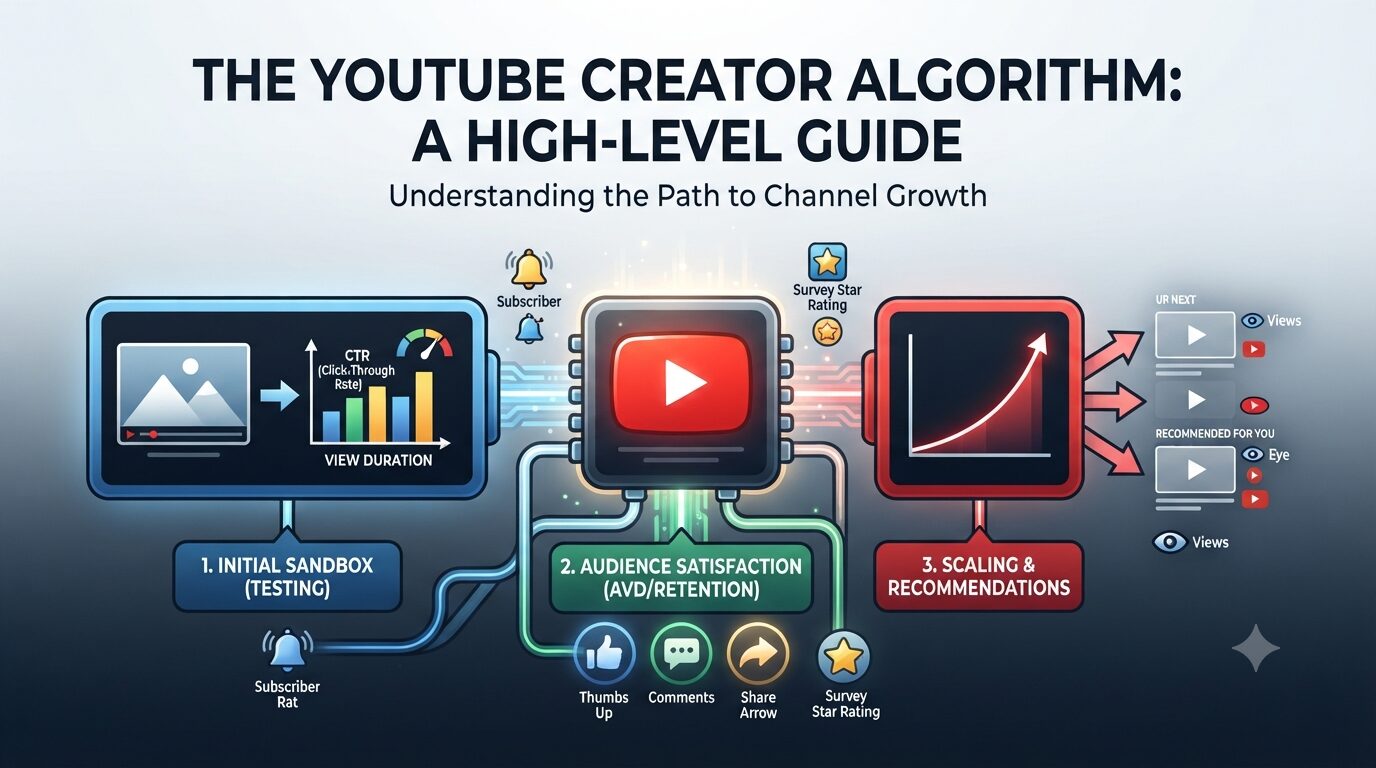
Phase 1: The Initial Sandbox and Click-Through Rate (CTR)
When you publish a new video, YouTube does not broadcast it to your entire subscriber base immediately. Instead, it enters a testing phase.
- Sample Testing: The algorithm tests your video with a small, relevant sample of your target audience.
- The CTR Metric: The most crucial signal here is your Click-Through Rate (CTR). If your thumbnail and title effectively intrigue the audience, the algorithm registers a high-confidence signal and expands your reach.
Phase 2: Retention and Audience Satisfaction (AVD)
Getting a click is only the first step. The algorithm then monitors Average View Duration (AVD) to determine the content’s quality.
Engagement signals that dictate ranking:
- Watch Time: Are viewers dropping off early, or are they watching the video until the end?
- Session Time: Does your video keep the viewer on YouTube, or does it cause them to leave the site?
- Audience Sentiment: Likes, comments, and shares provide qualitative data that confirms viewers are finding value.
Phase 3: Scaling and Audience Signals
Once your video proves successful in the test group, the algorithm shifts to “scaling mode.” It analyzes the demographics, interests, and past viewing habits of your engaged viewers to identify similar, untapped audiences.
| Metric | Impact on Ranking |
|---|---|
| High CTR | Signals high interest; increases potential impressions. |
| High Retention | Signals high value; keeps the video in circulation longer. |
| Active Engagement | Signals community interest; triggers recommendation priority. |
Conclusion: Strategic Implications
To succeed, stop “gaming” the algorithm and start serving the viewer. Invest heavily in your “hook”—the first 5-10 seconds—to prevent initial drop-off. By focusing on high-intent thumbnails and engaging narratives, you provide the data the algorithm needs to promote your content to the widest possible audience.


Leave a Reply