Exploring the Lethal Defensive World of the Porcupine
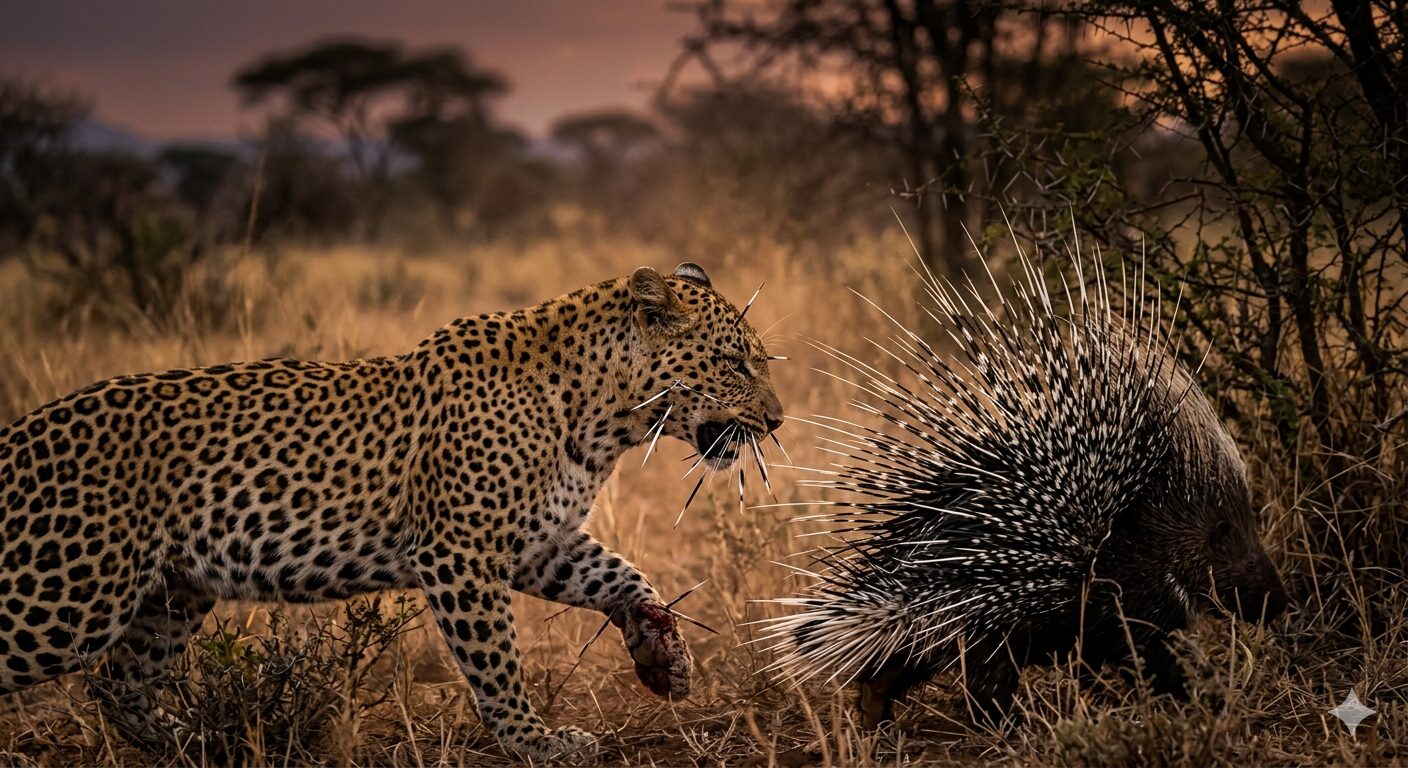
Nature’s Pincushion
In the unforgiving wild, predators often view the porcupine as a slow-moving, high-calorie meal. However, this “easy target” is equipped with one of the most effective passive defense systems in the animal kingdom. While most conflicts end quickly, an encounter with a porcupine often leaves a predator with a lingering, and frequently fatal, souvenir.
Why Porcupine Injuries Are Often Fatal
In the wild, there are no veterinarians to perform surgeries or prescribe antibiotics. For a predator, even a few quills can lead to a slow decline for several reasons:
1. The Mechanical Barbs
Porcupine quills are tipped with microscopic, backward-facing barbs. Once a quill enters the flesh, these barbs ensure it only moves in one direction: inward. Every muscle contraction by the predator pulls the quill deeper into the tissue.
2. The Starvation Trap
If quills are lodged in the mouth, tongue, or jaw, the predator may become unable to close its mouth or chew. Unable to hunt or eat, even the most powerful lion can eventually die of starvation.
3. Internal Migration
Because the quills move deeper over time, they can eventually migrate through the body to pierce vital organs—such as the heart, lungs, or eyes—leading to sudden death or permanent disability.
4. Secondary Infections
The punctures cause deep infections and abscesses. Without medical intervention, these can lead to sepsis (blood poisoning), which is almost always fatal in the wild.
The Porcupine’s Natural Enemies
While many animals avoid porcupines entirely, a few specialized predators have evolved the intelligence or physical traits to hunt them successfully:
| Predator | Strategy & Adaptation |
|---|---|
| Leopard | A surgical hunter that uses its paws to strike at the porcupine’s unprotected face or wait for a precise opening to flip it over. |
| Fisher | A small, agile member of the weasel family that circles the porcupine relentlessly, biting its face until it is too weak to defend itself. |
| Honey Badger | Possesses thick, loose skin that prevents quills from reaching vital organs, allowing it to wrestle the porcupine to reach its soft belly. |
Discussion Summary
In this comprehensive overview, we have synthesized several key biological and behavioral insights:
- Biological Mechanics: Understanding the barbed structure of quills and why they “travel” through tissue.
- Survival Odds: Examining why these injuries are rarely survived by unspecialized predators due to infection and starvation.
- Combat Tactics: Debunking the “shooting quill” myth and explaining the actual “reverse-charge” attack method.
- Evolutionary Counter-Measures: How specific hunters like the Fisher and Honey Badger have developed bypasses to this spiky armor.

Leave a Reply